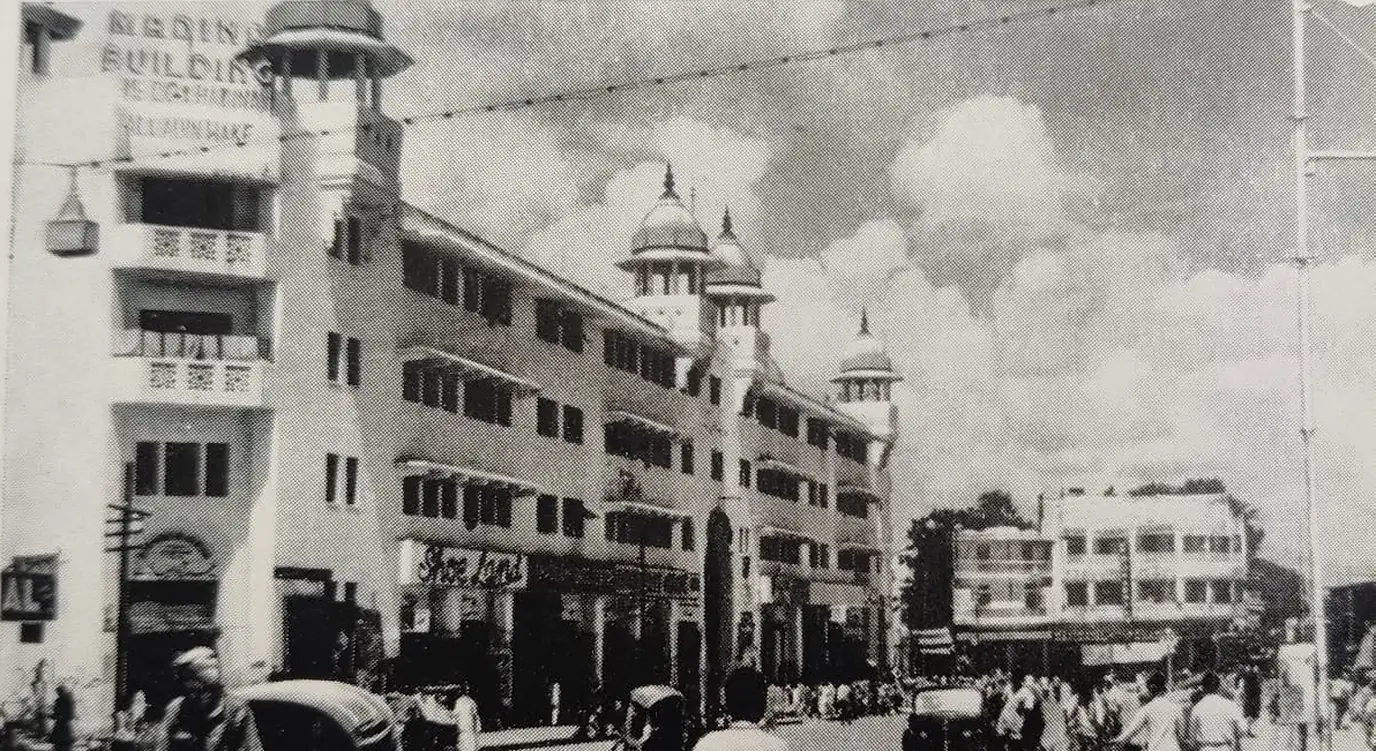
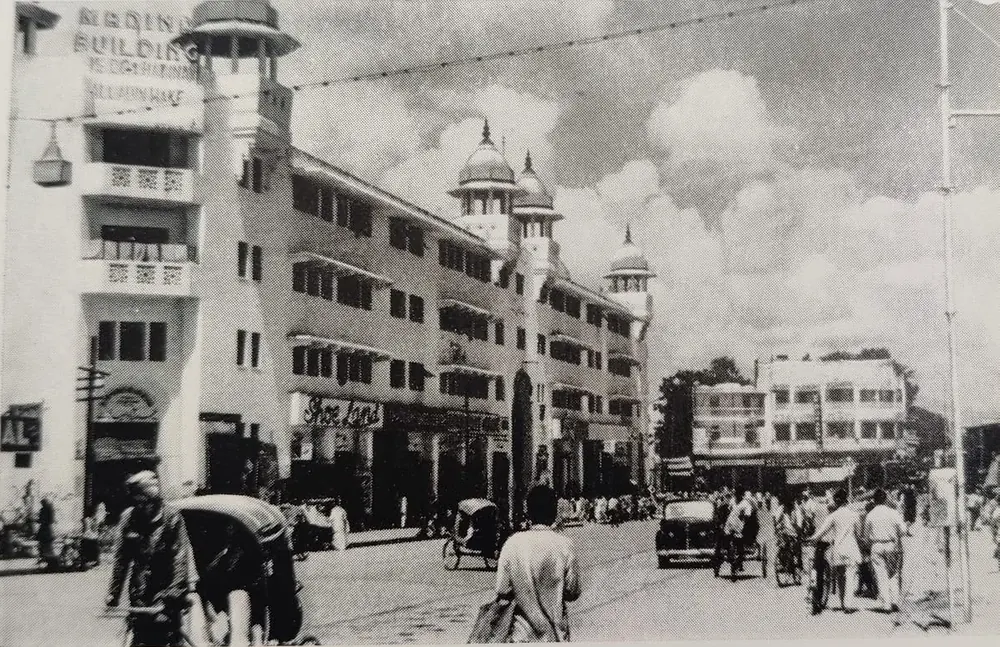
The Madina Building on Pathergatti Road, Old City Hyderabad — the 1947 premises of Madina Hotel, its domed turrets above the street
Since 1947

The Chronicles of Madina

How a dining hall at the threshold of the Charminar became one of the defining kitchens of Hyderabad.

The Timeline

Seven Decades on Pathergatti Road


1947

The Foundation

Madina Hotel opened its doors in the year of independence, in the Madina Building on Pathergatti Road — a building already endowed to the service of pilgrims. What started as a modest dining hall, serving the traders and travellers who passed through Ghansi Bazaar, quickly became a fixture of daily life in the Old City.
1956

Haleem Comes to the Public Table

Haleem — wheat, lentils and meat pounded to a paste and cooked for hours — had long been a dish of palace kitchens and private gatherings rather than of restaurants. Madina is widely credited with putting it on an everyday commercial menu, turning a delicacy of the few into a dish anyone in the city could sit down and order.

1992

The Kitchen Changes Hands

Madina was founded and run by Irani proprietors — Hussain Sahab among them — and is the kitchen widely credited with bringing both biryani and haleem out of the palace kitchens and onto an everyday commercial menu. In 1992 it passed to the Jabri family, who run it today. The ownership changed. The method did not.

Today

The Same Kitchen, the Same Method

The doors still open seven days a week, from midday until one the following morning. The biryani is still finished on dum over coal. The chai is still brewed slowly. Very little about the method has been allowed to change.

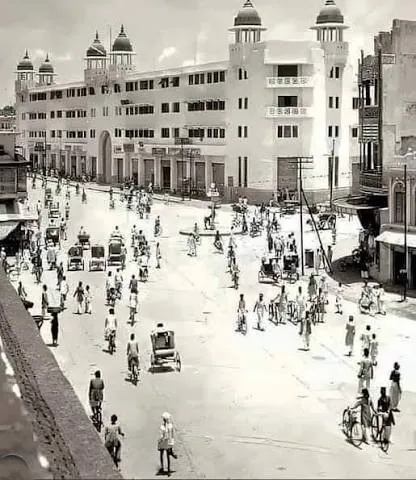
Archival photograph of the Madina Building on Pathergatti Road, the street ahead of it filled with cyclists, rickshaws and pedestrians
The Dish That Made Us

Why 1956 Still Matters

Before it was a street food sold by the kilo across Hyderabad every Ramadan, haleem was something most people had heard of but rarely eaten. It took hours of pounding, a wood fire and a large copper deg — the kind of undertaking a household did for an occasion, not a Tuesday.

Putting it on a restaurant menu changed who got to eat it. That decision is the reason a dish once associated with palace kitchens is now, seventy years later, the thing Hyderabad is arguably best known for after the Charminar itself.

1947

Year founded

1956

Haleem on the menu

13 hrs

Open every day

Archival Memories


The Madina Building on Pathergatti Road, as it stood.

Archival photograph of the Madina Building, its name painted across the parapet, with the domed turrets above and rickshaws on Pathergatti Road below

Pathergatti Road, the building carrying its own name across the parapet. Published in a Russian magazine; the year is not known.

Archival photograph of the Madina Building seen from further along Pathergatti Road, the street ahead of it filled with cyclists and pedestrians

The same stretch of road on an ordinary working morning.

The Madina Building

The Building Came First


Madina Hotel stands inside the Madina Building — waqf property, an Islamic charitable endowment, built by Mir Osman Ali Khan, the seventh Nizam of Hyderabad, to serve pilgrims travelling for Hajj.

Its two hundred shops and hundred flats paid rents that went to the residents of Madina Munawwara, in the Hejaz. Pathergatti — the stone-arcaded stretch running north from the Charminar — dates to 1911 and the same Nizam’s reign. Madina Hotel opened inside the building in 1947.

The rent from the shop was used to serve Haj pilgrims. Rajeswari Parasa, Deccan Chronicle, 17 May 2018
Not in the Archives

Our Own Record


This part is in no book, newspaper or archive. It is Madina’s own account, and we publish it as exactly that.

Our record is that the seventh Nizam, Mir Osman Ali Khan, did not only build the building — he came when Madina Hotel opened in 1947 and inaugurated it himself. And that the restaurant was founded as a charitable source of income, to help fund the Madina Education and Welfare Society and to support Hajj pilgrims — the same purpose the building already carried.

Sources

The building’s history above — its waqf status, the seventh Nizam, the Hajj endowment, the rents to Madina Munawwara, the 200 shops and 100 flats — comes from Wikipedia on the Madina building and Pathargatti, and from Rajeswari Parasa in the Deccan Chronicle of 17 May 2018, which also reports the 1947 opening.

Those sources do not cover Madina’s own record above, which rests on the restaurant’s word alone. The archival photographs are credited in their captions.

Taste the History Yourself


The shortest way to understand any of this is to sit down at one of our tables and order the biryani.

Seeing the rest of the quarter while you are here? Our one-day guide to Charminar maps the monuments and the bazaars around this building, and ends at our door.

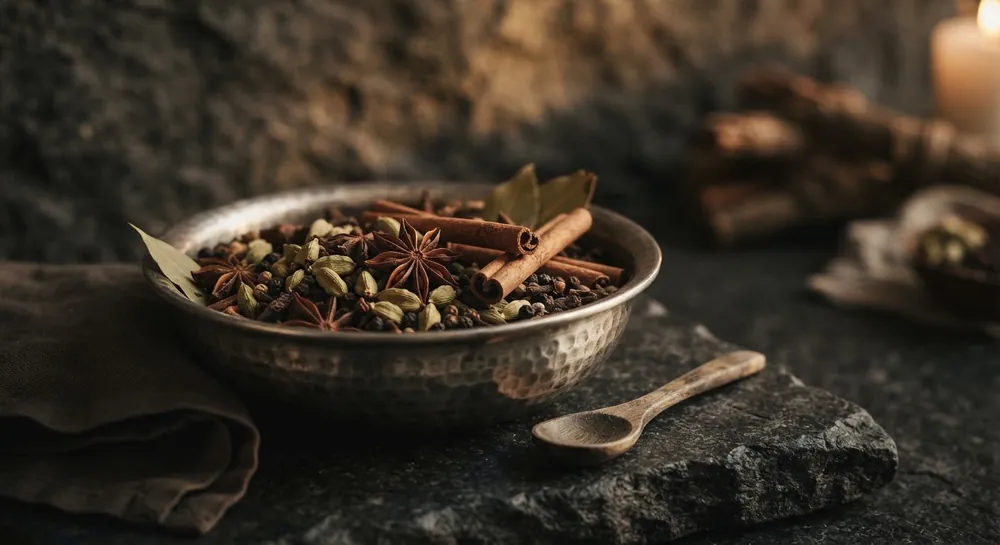
Star anise, cinnamon and cardamom in a silver bowl, the aromatics of a Hyderabadi spice blend